A little while ago, I wrote an article here called The End of Horse Antivenoms?, where I discussed an approach to treating snakebite that is very different from the way we have been making antivenom for more than a century. Conventional antivenom is produced by repeatedly immunising large animals, usually horses, with snake venom and then collecting and purifying the antibodies their immune systems produce. It is an ingenious technology that has saved countless lives, but it is also a rather unusual way of making a modern medicine. The final product contains an enormous and somewhat unpredictable mixture of antibodies, only a fraction of which may actually neutralise the toxins that make a snakebite dangerous.
In that earlier article, I described an alternative idea: what if we could identify the antibodies that are particularly good at neutralising the most medically important toxins, manufacture those antibodies individually, and then combine them to create an antivenom whose composition we know precisely? I used a superhero analogy that was admittedly a little silly, but I still think it captures the problem rather well. One exceptionally powerful antibody was never going to solve snakebite because venom contains too many different toxins. We did not need Batman; we needed the Justice League, a collection of antibodies with complementary abilities that could work together.
At the end of that article, I mentioned that we were already working on antibodies against some of India’s medically important snakes, but I could not say much more at the time. This new study is one of the projects I was referring to.
Five tiny antibodies
In this work, together with our collaborators, Andreas Laustsen, Anne Lungars and others at the Denmark Technical University, we developed an experimental antivenom consisting of just five nanobodies. Nanobodies are very small antibody fragments derived from an unusual type of antibody found naturally in camelids, the group of animals that includes camels, llamas and alpacas. Despite their much smaller size, they can recognise their molecular targets with remarkable precision. They also have several properties that make them attractive as potential medicines: they can be very stable, can be produced efficiently using microorganisms, and their small size can help them move rapidly through tissues.
What interested us most, however, was not simply that these antibodies were small. It was that we could choose exactly which ones went into our experimental antivenom.
Snake venom is not a single poison but a complex mixture of many different toxins. Cobra and king cobra venoms contain several particularly important toxin families. Among them are neurotoxins that interfere with communication between nerves and muscles and can ultimately cause paralysis and respiratory failure, cytotoxins that damage cells and tissues, and enzymes called phospholipases A2 that contribute to several damaging effects of envenoming. We therefore selected five nanobodies that, between them, targeted these major toxin groups and combined them in defined proportions to create our recombinant antivenom.
This is a fundamentally different way of thinking about antivenom. Instead of immunising an animal and accepting the enormous collection of antibodies its immune system happens to produce, we were assembling the treatment deliberately, molecule by molecule.
An African beginning to an Indian story
There was another interesting twist to this experiment. The nanobodies we used had not originally been discovered against Indian cobra venoms. Our collaborators had previously identified and functionally tested them against related toxin families found in African elapid snakes. We wanted to know whether modern biotechnology could take molecules discovered against toxins from one part of the world and use them to neutralise related toxins in snakes thousands of kilometres away.
There was a good evolutionary reason to think this might work. African and Asian cobras have been evolving independently for millions of years, and their venoms are certainly not identical. Yet they continue to rely on many of the same broad toxin families. A neurotoxin that causes paralysis, for example, still has to interact with particular targets in the nervous system. This places constraints on how much certain important parts of the toxin can change while retaining their function.
For antibody developers, those shared features are extremely valuable. Rather than producing a different antibody against every toxin variant found in every population of every snake species, we can search for antibodies that recognise features shared by many related toxins. Such antibodies are often referred to as broadly neutralising antibodies, because a single molecule may be capable of neutralising several related toxins.
The question for us was whether this cross-reactivity extended far enough to work against the extraordinarily diverse cobra venoms found in India.
The problem of venom variation
If you have followed some of our earlier work on The Venom Detective, you will know that venom variation is something of an obsession in our laboratory. We have spent years studying how venoms change across geography, between populations and species, and even over the lifetime of an individual snake. In When Snake Venom Grows Up, for example, I discussed our finding that newborn and adult snakes can sometimes produce remarkably different venoms.
This diversity is fascinating if you are interested in evolution, but it becomes a serious problem when you are trying to make a medicine.
A spectacled cobra from one part of India does not necessarily produce exactly the same venom as a spectacled cobra from another. The relative abundance of individual toxins can change substantially across populations, which is one reason conventional antivenoms do not always perform equally well against the same snake species from different geographical regions. India, with its enormous geographical and ecological diversity, makes this an especially difficult problem.
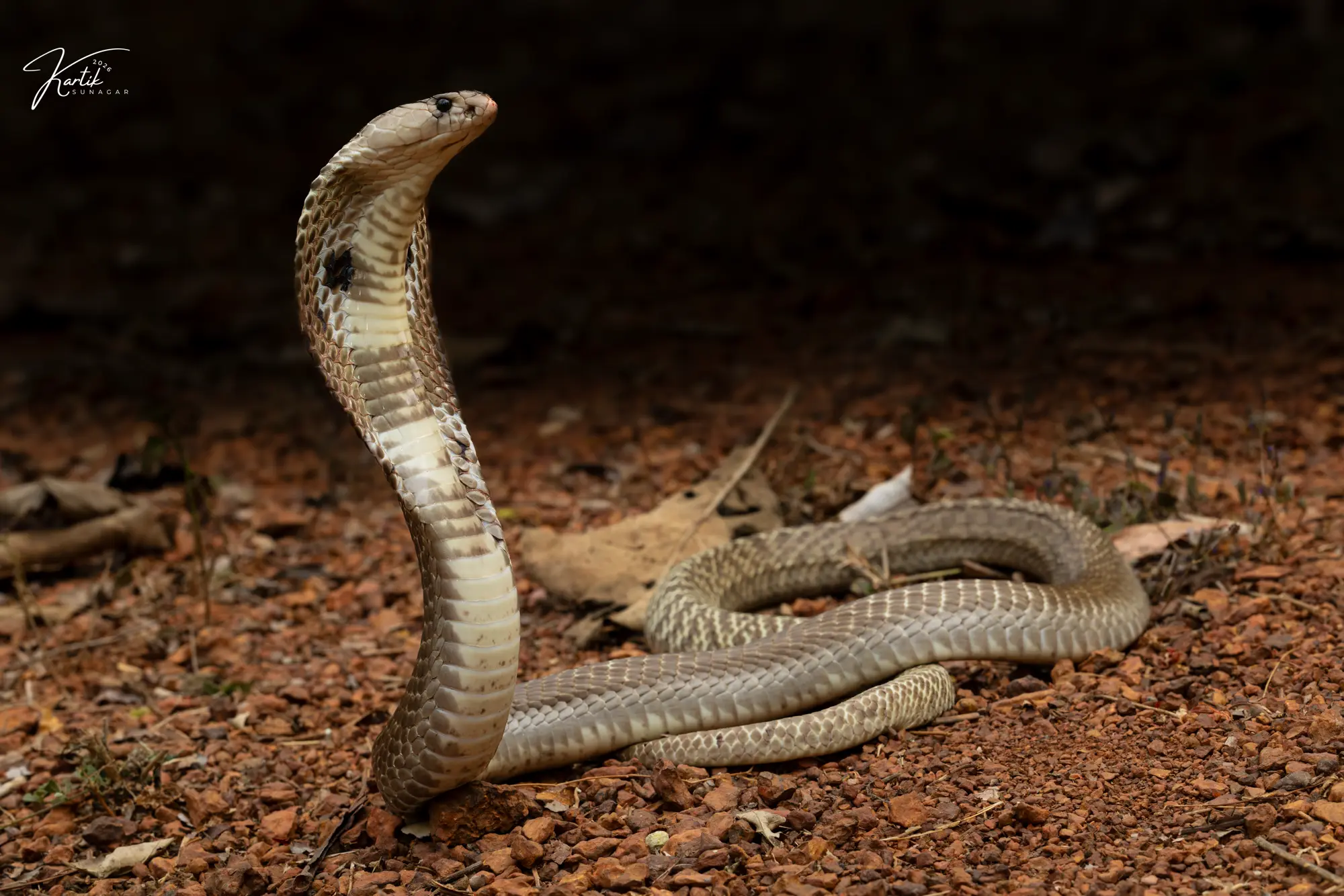
We therefore did not want to demonstrate that our nanobodies worked against venom obtained from a single cobra population and stop there. We tested them against spectacled cobra (Naja naja) venoms representing different parts of India, as well as monocled cobra (Naja kaouthia) and both species of king cobra found in India, Ophiophagus kaalinga and Ophiophagus hannah.
The five nanobodies recognised these geographically diverse cobra and king cobra venoms. Importantly, we also wanted to know whether they were doing more than simply sticking to venom components. Binding is useful, but an antibody that binds beautifully to a toxin without stopping its activity may not make a useful medicine. We therefore carried out functional experiments to determine whether the nanobodies could actually interfere with the toxins they were designed to target. For example, the nanobody directed against phospholipase A2 toxins substantially reduced their enzymatic activity across the cobra and king cobra venoms we tested.
We also examined some of the less glamorous but important properties that matter when developing a therapeutic molecule. The nanobodies showed little unwanted interaction with unrelated molecules in our tests and remained stable under relatively demanding conditions, including exposure to elevated temperatures. These characteristics are encouraging for a medicine that would ultimately need to be manufactured, transported and stored in parts of the world where maintaining an uninterrupted cold chain can be difficult.
All of this looked promising, but laboratory binding and biochemical experiments can only take you so far. Ultimately, we needed to ask whether five tiny antibodies could actually protect an animal from a lethal dose of cobra venom.
From neutralising toxins to stopping venom
Our first experiments followed a standard approach used in antivenom research. We mixed venom with the nanobody cocktail before administering it to mice. This allows us to establish whether the treatment has the fundamental ability to neutralise the venom under controlled conditions.
The results were encouraging. The five-nanobody cocktail protected mice challenged with lethal doses of geographically diverse spectacled cobra venoms, monocled cobra venom and venoms from both king cobra species we tested.
However, this type of experiment has an obvious limitation: this is not how snakebite happens. A snakebite victim does not have the luxury of mixing antivenom with venom before being bitten. By the time treatment is given, the venom has already entered the body, begun spreading through tissues and circulation, and may already be interfering with nerves, muscles and other physiological systems.
We therefore moved to what we considered a much more informative experiment. We injected the venom first and administered our recombinant antivenom afterwards.
When mice received a lethal dose of venom without effective treatment, they rapidly developed severe signs of envenoming, including paralysis and breathing failure. In contrast, administering the nanobody cocktail five minutes after envenoming protected the animals in the cobra and king cobra models we tested. This showed us that the nanobodies were not restricted to neutralising venom under the artificial conditions of a pre-mixed experiment; they could also rescue animals after the venom had already entered the body.
We then made the experiment progressively more difficult by delaying treatment and reducing the amount of nanobody administered. In our spectacled cobra model, the treatment continued to protect the mice when administered 5, 10 and even 20 minutes after the venom. We could also substantially reduce the amount of nanobody and still retain protection.
These experiments were particularly important to us because potency matters enormously for the eventual practicality of recombinant antivenoms. Previous experimental antibody approaches have sometimes required relatively large amounts of antibody to neutralise venom in mice, which could translate into impractically large quantities if scaled directly to humans. Here, we showed that it was possible to neutralise a lethal venom challenge using very small quantities of carefully selected antibodies. It is far too early to calculate what a human dose might eventually look like, but demonstrating high potency at this stage is encouraging from both manufacturing and therapeutic perspectives.
A mouse minute is not a human minute
The 20-minute result needs to be interpreted very carefully. It would be incorrect to read our experiment and conclude that this treatment would need to be given to a snakebite patient within 20 minutes, or that a person treated within that period would necessarily survive.
Mice and humans differ enormously in body size, physiology, circulation and metabolism, and venom and therapeutic antibodies move through their bodies at very different rates. Twenty minutes in this mouse experiment therefore does not correspond to 20 minutes after a snakebite in a human.
The important observation is not the precise number of minutes. What matters is that the treatment could still save the animals when it was administered after the venom had entered the body and begun producing severe effects. That is a considerably more realistic test of a potential treatment than simply mixing venom and antibody together beforehand.
Ultimately, only carefully designed clinical studies can tell us how these molecules will perform in people. Nobody would, of course, deliberately be exposed to snake venom for such a trial. Instead, these new treatments would eventually need to be studied in patients who arrive at hospitals after naturally occurring snakebites. Initially, they could be administered alongside conventional antivenom, allowing us to ask practical questions such as whether recombinant antibodies reduce the number of antivenom vials required, improve recovery, reduce adverse reactions or provide better protection against particular toxins.
The krait that got away
Not everything worked, and that is an equally important part of the story. When we tested the same five-nanobody cocktail against the common krait (Bungarus caeruleus), it failed to protect the animals.
This was disappointing, but not entirely surprising. We had selected these nanobodies around the major toxin families that dominate cobra and king cobra venoms. Kraits rely heavily on additional toxins, including β-bungarotoxins, that our five nanobodies were simply not designed to neutralise.
The cocktail is therefore not a universal antivenom for India, and we do not claim that it is. It does not currently address the very different toxin arsenals of kraits, Russell’s vipers, saw-scaled vipers and other medically important snakes.
But this limitation also illustrates one of the major advantages of building an antivenom from defined components. We know what is missing.
If we want to protect against kraits, we can identify antibodies against the important krait toxins and add them to the cocktail. Viper venoms would require a different collection of molecules again. If one antibody does not provide sufficiently broad protection, it can potentially be replaced with a better one. In principle, recombinant antivenoms could eventually be designed as modular treatments, with different combinations assembled according to the snakes and toxin families that need to be covered.
This brings me back to the Justice League analogy from The End of Horse Antivenoms?. Five members have now turned up, and together they can take on a remarkably diverse collection of cobra and king cobra venoms. But we still need to recruit several more before the team can tackle India’s full diversity of medically important snakes.
Is this the end of horse antivenoms?
Despite the title of my earlier article, conventional antivenoms are not disappearing anytime soon. They remain the cornerstone of snakebite treatment and save lives every day. Our experiments were performed in mice, and the nanobody cocktail described here is not a medicine that can currently be given to snakebite patients.
There is a considerable distance between protecting mice in carefully controlled experiments and treating people in hospitals. We need to understand how long these molecules remain in circulation, how they move between blood and tissues, how they interact with toxins that are themselves moving through the body, and whether modifying their molecular structure could improve their performance. Further studies in appropriate animal models will be required, followed by pharmaceutical manufacturing, extensive safety testing and ultimately clinical trials.
I also increasingly suspect that the future of snakebite treatment may not involve replacing one technology with another. It may instead involve combining several approaches, each addressing a different weakness of current therapy.
In Leaf to Life, I wrote about another strand of our research in which we investigated plant-derived molecules that could inhibit important components of Russell’s viper venom. That work addresses a somewhat different problem. Some venom toxins begin causing damage rapidly after a bite, particularly around the bite site, and antibodies administered intravenously may not always reach those tissues quickly enough to prevent all of that damage. Small molecules may have very different pharmacological properties and could potentially complement antibodies rather than compete with them.
The same logic applies to recombinant antivenoms. In the early stages of clinical development, I would expect treatments like these to be evaluated alongside conventional antivenom rather than as immediate replacements for it. A small number of extremely potent recombinant antibodies might rapidly neutralise the most dangerous toxins, while conventional antivenom continues to provide broader coverage. Small-molecule toxin inhibitors might eventually add yet another layer of protection, perhaps even being administered before a patient reaches hospital.
The best treatment for snakebite may therefore turn out not to be a single magical vial, but a carefully designed combination of different medicines.
From understanding venom to designing its antidote
There is a broader story behind this experiment that connects much of the work we have been doing for years.
We began by trying to understand venom itself: why it evolves, why snakes from different places produce different venoms, why venom changes during a snake’s lifetime, and why two closely related species can sometimes possess dramatically different toxin arsenals. Much of that work was driven simply by curiosity about how evolution produces such remarkable biochemical diversity.
But those evolutionary studies kept pointing us towards the same practical problem. Venom is extraordinarily diverse, while the way we manufacture antivenom has remained remarkably similar for more than a century.
Understanding venom diversity also gives us a way to address that mismatch. Once we know which toxins are responsible for the most dangerous effects of a bite, which toxins are shared between species, which parts of those toxins remain similar despite millions of years of evolution, and which toxins vary dramatically from one region to another, we can begin designing treatments around that information.
That is what makes this study particularly satisfying for me. It brings together two worlds that are sometimes treated as completely separate: evolutionary biology and biotechnology. Understanding how toxins evolve can tell us where their vulnerabilities lie, and modern antibody engineering gives us the tools to exploit those vulnerabilities.
For more than a century, antivenom has largely been something we harvest from an animal’s immune response. We immunise the animal, allow its immune system to decide which antibodies to make, and purify the resulting mixture.
The possibility raised by recombinant antivenoms is fundamentally different. We can identify the toxins that matter, choose antibodies that neutralise them, manufacture those molecules individually, and decide precisely what goes into the final treatment.
In other words, instead of simply harvesting an antivenom, we can begin to design one.
Paper: Samanta A et al. (2026). Oligoclonal nanobody-based recombinant antivenom protects mice challenged with venom from cobras and king cobras from India. Science Translational Medicine.
News coverage
News reports, features and press coverage of this study. Coverage collected through 20 October 2026.
News and features
- Nature India — This chemical cocktail neutralizes some of India’s deadliest snake venoms
- The Independent — This antivenom cocktail could be game-changer for treating snakebites
- The Times of India — New hope for snakebite victims: IISc develops first recombinant antivenom
- India Today — Scientists develop antivenom cocktail against Indian King Cobra. It saved mice
- ScienceNews.dk / Future Medicine — Five tiny antibodies could point the way to a new generation of snake antivenom
- The Conversation / Medical Xpress — Snakebites kill tens of thousands every year, could our new research change that?
- The Tribune — New antivenom offers broad protection against cobra, king cobra venom in India
- Onmanorama — King cobra to spectacled cobra: New generation antivenom to transform snakebite treatment
- Outlook India — Scientists Develop Antibodies Targeting Multiple Cobra Venoms
- News Ei Samay — IISc-led study develops recombinant antivenom against diverse Indian cobra venoms
- Commonwealth Union — New Nanobody Antivenom Could Improve Treatment of Cobra Snakebites
- NewsFlash Daily — Camel Blood Nanobodies Offer New Hope Against Snake Venom In India
Science and medical coverage
- BioCentury — Five-nanobody recombinant antivenom for Indian cobras and king cobras
- Technology Networks — Antivenom Shows Promise Against Snakebites From Various Species
- News-Medical — New nanobody antivenom offers broad protection against Indian cobras
- Medical Xpress — Engineered antibodies offer broad protection against deadly cobra toxins
- Brightsurf — Engineered antibodies offer broad protection against deadly cobra toxins
- DrugsControl Media Services — IISc–Denmark team’s recombinant nanobody antivenom
- OC Academy — Novel Recombinant Antivenom Shields Against Cobra Bites
- Health and Family — Engineered Antivenom Shields Mice Against Deadly Cobra Toxins, Signaling a Shift in Snakebite Medicine
Further newspaper and syndicated coverage
- The New Indian Express — Scientists develop antivenom for Indian cobras
- Economic Times / ETHealthworld — Researchers develop lab-produced antivenom offering broad protection from diverse Indian cobras
- Rediff — Lab-produced antivenom offers broad protection from cobras
- Mid-day — Researchers develop lab-produced antivenom offering broad protection from diverse Indian cobras
- Bangalore Mirror — IISc team’s antivenom tackles cobra venom, saves mice in tests
Institutional releases
- Indian Institute of Science — Engineered antibodies offer broad protection against deadly cobra toxins
- IISc Kernel — Engineered Antibodies Offer Broad Protection Against Deadly Cobra Toxins
- EurekAlert! — Engineered antibodies offer broad protection against deadly cobra toxins
Comments